Gas Insulated or Air Insulated Switchgear 
By on

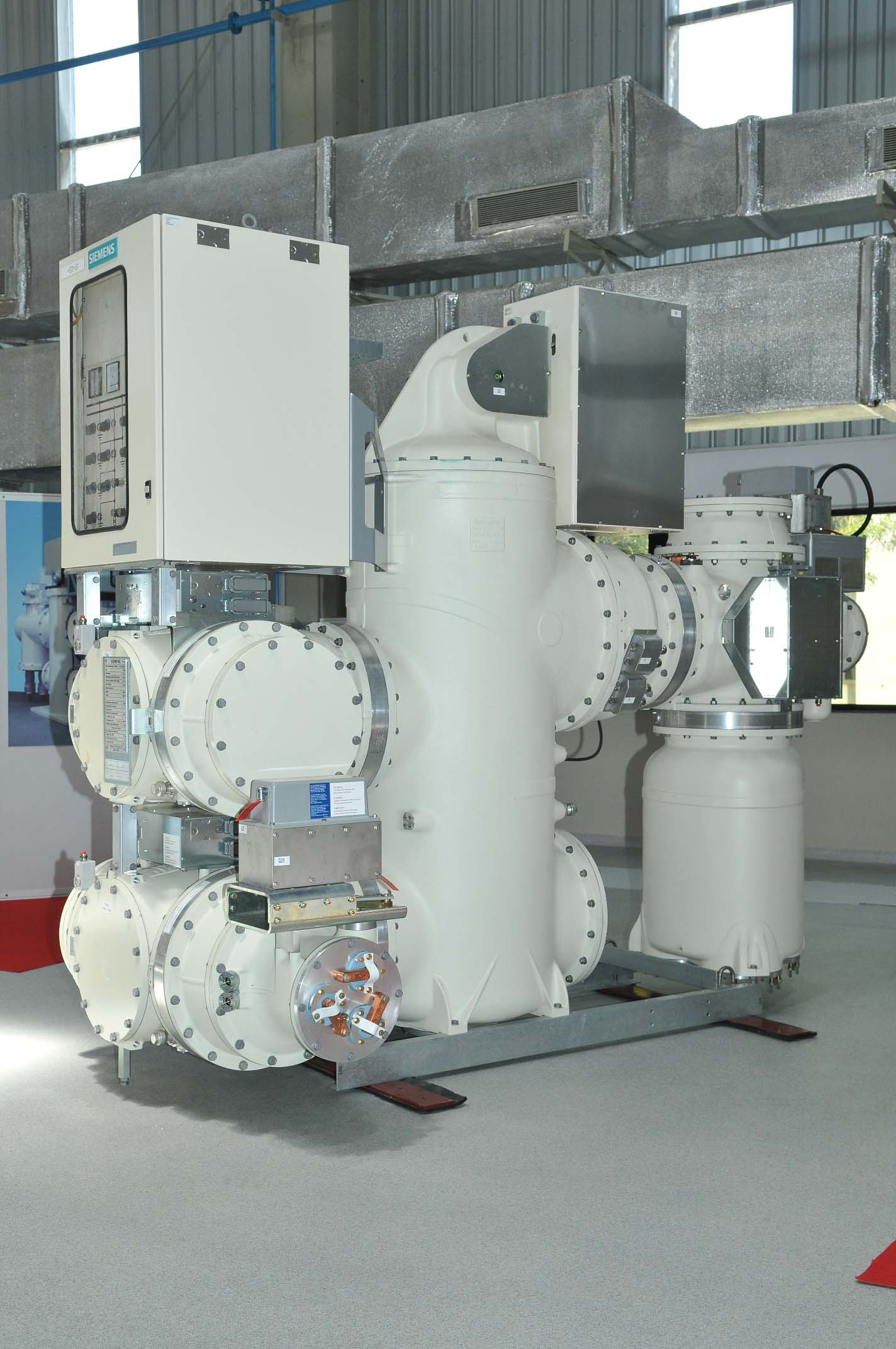
Various arguments exist around SF6 Gas Insulated (GIS) and Air Insulated (AIS) switchgear. Recently we had to change a GIS design to AIS due to an instruction from one of  our clients.  His concern is the global warming potential of SF6.   While understanding the clients reasons, I'm not convinced on the argument.

General arguments in favour of GIS include:

  • GIS is more cost effective
  • requires less space (up to 70% less that Air Insulated)
  • is safer in operation
  • has overall lower system loses
  • has higher protection against ambient conditions
  • is more reliable

As far as I can see the main argument against SF6 is that it has a global warming potential.  From an environmental view, the potential of releasing gas which contributes to global warming is obviously bad.  However, to quantify the effect, Capiel (see link below) has carried out some research:

  • GIS switchgear emissions (Europe, 2002) contribute 0.05% to total greenhouse gas emissions
  • measures implemented in switchgear design since 1995 have reduced GIS gas emissions by 40%
  • there is continuing technological progress in further reducing GIS gas emissions

Key Question

I think the key question in all of this is:

  • do the benefits of a safe reliable, cost effective electrical supply networks outweigh the potential SF6 contribution to greenhouse gas emissions ?

My View

The direct contribution of SF6 to greenhouse gas emissions is relatively low and I tend to think the advantages of a reliable electrical system outweigh these negatives.  Lower system loses and less materials required during manufacture reduce the life cycle carbon emissions, potentially offsetting the negative effects of SF6. 

A life cycle analysis of the German distribution system by Capiel (see link below) which considers materials, manufacture, ohmic losses and SF6 emissions shows that overall GIS contributes 30% less to global warming than AIS. Currently the arguments given against GIS don't appear sufficiently thought out and consider only the SF6 emission issue.

Without closing the door on the debate, I don't see enough evidence to force move away from GIS to AIS. 

Related Links


Steven McFadyen's avatar Steven McFadyen

Steven has over twenty five years experience working on some of the largest construction projects. He has a deep technical understanding of electrical engineering and is keen to share this knowledge. About the author

myElectrical Engineering

comments powered by Disqus


What are you reading!

Reading is a bit of a hobby of mine and I"ve done a few off-topic posts in the past on this. Rather than continue doing the occasional post I thought ...

Generation of a Sine Wave

A fundamental concept behind the operation of alternating current systems is that voltage and current waveforms will be sinusoidal – a Sine Wave. This...

LED Replacement Light Bulb

The inventor of the first visible light-emitting diode makes history again this year as it begins to show customers a 40-watt replacement GE Energy Smart...

Maximum Demand for Buildings

Estimating maximum demand is a topic frequently discussed. Working out how much power to allow for a building can be very subjective . Allowing too much...

Multimeter

Multimeters are undoubtedly the most common item of electrical test equipment in use.  Often it is the first piece of equipment people will turn to when...

IEC Document Designation

Often document control is dictated by project requirements, for example a particular organisation may have an existing numbering system. Existing company...

Motor Efficiency Classification

Electric motors are one of the most widely used items of electrical equipment. Improving motor efficiency benefits include, reduced power demand, lower...

8 Motor parts and common faults

Straight forward list of some common motor faults.  If I have missed any other common faults, please take a bit of time to add them in as a comment below...

Always Use PPE

A lot of our members work in countries where PPE (personal protective equipment) is regulated or they work for companies/organizations which take employee...

Thermoplastic and Thermosetting Insulation

While there are a vast array of cable insulation materials, these are often divided into two general types; Thermoplastic or Thermosetting. For example...

Have some knowledge to share

If you have some expert knowledge or experience, why not consider sharing this with our community.  

By writing an electrical note, you will be educating our users and at the same time promoting your expertise within the engineering community.

To get started and understand our policy, you can read our How to Write an Electrical Note