Battery Cars A to Z  

By on

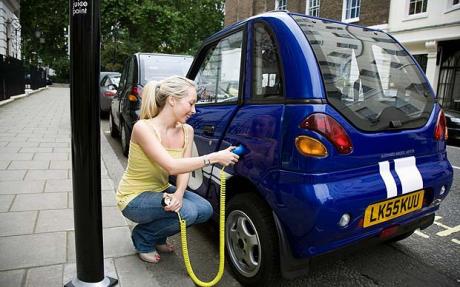
Electric CarBattery powered cars are a hot topic and widely debated. The pros, cons, issues and time frames can be talked about endlessly. An article by the Telegraph looks at some of the issues in an A to Z format:

  • A is for AC/DC. Not the band, but alternating current ... ... etc.
  • B is for Bad cars. ... ...
  • C is for Cost. ... ...
  • Etc., etc. ...

While not an in depth study of all (or any individual) issue it does pull together in an easy to read form much of the technology and many of the issues. An interesting read especially if your not an electric car expert and just want a quick overview of the current situation.

You can find the article at:

http://www.telegraph.co.uk/motoring/green-motoring/7611253/Battery-car-A-to-Z.html


Steven McFadyen's avatar Steven McFadyen

Steven has over twenty five years experience working on some of the largest construction projects. He has a deep technical understanding of electrical engineering and is keen to share this knowledge. About the author

myElectrical Engineering

comments powered by Disqus


Cable Insulation Properties

Cable insulation is used to provide electrical separation between conductors of  a cable.  During the historical development of cables, numerous types...

9 power supply issues solved by using a UPS

Installation of a UPS can help in reducing problems due to issues with the power supply.  A lot of people relate this to nine key issues.  Depending on...

Battery Cars A to Z

Battery powered cars are a hot topic and widely debated. The pros, cons, issues and time frames can be talked about endlessly. An article by the Telegraph...

DC Component of Asymmetrical Faults

The image (reproduced from IEC 60909) shows a typical fault in an ac system.  From the illustration it can seen that there is an initial dc component ...

110 or 230 Volts

I've been considering a blog on the 110 or 230 Volt issue for a while.  While browsing the Internet I came across a great summary by Borat over at  engineering...

Arc Flash Calculations

Working in the vicinity of electrical equipment poses an hazard. In addition to electric shock hazard, fault currents passing through air causes Arc Flash...

Michael Faraday (the father of electrical engineering)

Famed English chemist and physicist Michael Faraday was born on September 22, 1791, in Newington Butts, a suburb of Surrey just south of the London Bridge...

Autonomous Vehicle Challenge

Two driverless and solar power vans have departed from Italy on their way to China via the silk road. During the 13,000 kM trip the vans will drive themselves...

How to Check a Circuit is Dead

If you want to check a circuit is dead (not live), you should always use the three point method. First check a known live circuit, then check the dead...

The ac resistance of conductors

In a previous article I looked at the dc resistance of conductors and in this article we turn our attention to ac resistance. If you have not read the...

Have some knowledge to share

If you have some expert knowledge or experience, why not consider sharing this with our community.  

By writing an electrical note, you will be educating our users and at the same time promoting your expertise within the engineering community.

To get started and understand our policy, you can read our How to Write an Electrical Note